Currencies:HKD

You have no items in your shopping cart.

Financial Instruments: A Comprehensive Guide to Accounting & Reporting (2018)

Financial Instruments: A Comprehensive Guide to Accounting & Reporting (2018)

  • Author:
  • Publisher: CCH U.S.
  • ISBN: 9780808046998
  • Published In: November 2017
  • Format: Paperback , 1000 pages
  • Jurisdiction: U.S. ? Disclaimer:
    Countri(es) stated herein are used as reference only
New Edition is available now !
OR
  • Description 
  • Contents 
  • Author 

Details

Financial Instruments: A Comprehensive Guide to Accounting & Reporting (2018) is written for practicing accountants and other professionals who need to understand the accounting for financial instruments. This unique book pulls together all of the existing accounting literature on financial instruments into one volume, organizes it logically, and describes the requirements as simply as possible. This comprehensive, topic-based approach will save practitioners time and effort in researching accounting issues.

This comprehensive reference includes guidance issued by the Financial Accounting Standards Board, the FASB's Emerging Issues Task Force and Derivatives Implementation Group. It also includes standards issued by the AICPA Accounting Standards Executive Committee, and the audit and accounting guides issued by various committees of the AICPA.

This guide covers accounting requirements for public and private companies and touches on unique aspects of reporting financial instruments by nonprofit organizations. Over 400 pieces of authoritative literature are referenced in this book.

Each chapter covers the relevant accounting questions for each type of instrument, including:

  • When and how to initially recognize the instrument in the balance sheet
  • How to measure the instrument in subsequent periods
  • How to recognize income or expense
  • When and how impairment must be recognized
  • When the instrument should be removed from the balance sheet
  • What disclosures should be provided in the footnotes.

The text includes visual aids whenever possible; observations, such as differences between instrument types; practice pointers; and examples to make the requirements as clear as possible to the reader.

The book also includes: a cross-reference to the original pronouncements, citing the chapters in which they are discussed; a glossary of terms including references to the applicable chapters; and a detailed topical index.

To facilitate research, the text includes references to pertinent paragraphs of the authoritative literature addressing key points.

  • FASB Accounting Standards Update 2014-13, Consolidation (Topic 810): Measuring the Financial Assets and the Financial Liabilities of a Consolidated Collateralized Financing Entity
  • FASB Accounting Standards Update No. 2014-14—Receivables—Troubled Debt Restructurings by Creditors (Subtopic 310-40): Classification of Certain Government-Guaranteed Mortgage Loans upon Foreclosure (a consensus of the FASB Emerging Issues Task Force)
  • FASB Accounting Standards Update No. 2014-16—Derivatives and Hedging (Topic 815): Determining Whether the Host Contract in a Hybrid Financial Instrument Issued in the Form of a Share Is More Akin to Debt or to Equity (a consensus of the FASB Emerging Issues Task Force)
  • FASB Accounting Standards Update No. 2015-02—Consolidation (Topic 810): Amendments to the Consolidation Analysis
  • FASB Accounting Standards Update No. 2015-03—Interest—Imputation of Interest (Subtopic 835-30): Simplifying the Presentation of Debt Issuance Costs
  • FASB Accounting Standards Update 2015-07—Fair Value Measurement (Topic 820): Disclosures for Investments in Certain Entities That Calculate Net Asset Value per Share (or Its Equivalent) (a consensus of the FASB Emerging Issues Task Force)
  • New SEC staff guidance.

Financial Instruments covers the following topics:

  • Part I: Financial Assets
    • 1. Cash and Cash Equivalents
    • 2. Investments in Debt and Equity Securities
    • 3. Loans and the Allowance for Credit Losses
    • 4. Servicing of Financial Assets
    • 5. Transfers of Financial Assets
    • 6. Securitizations
    • 7. Interest on Loans and Other Debt Investments
  • Part II: Financial Liabilities
    • 8. Debt Financing
    • 9. Securities Lending Arrangements and Other Pledges of Collateral
    • 10. Convertible Debt and Similar Instruments
    • 11. Extinguishments of Debt
  • Part III: Derivatives and Hedging Activities
    • 12. Derivatives Accounting
    • 13. Embedded Derivatives
    • 14. Hedge Accounting
    • 15. Disclosures about Derivatives
  • Part IV: Equity Instruments
    • 16. Issuer's Accounting for Equity Instruments and Related Contracts
  • Part V: Pervasive Issues
    • 17. Offsetting Assets and Liabilities in the Balance Sheet
    • 18. Fair Value Measurements
    • 19. The Fair Value Option for Financial Instruments
    • 20. Financial Instrument Disclosures

Rosemarie Sangiuolo is an independent consultant with background in the financial services industry and accounting standard-setting. She specializes in accounting and reporting for financial instruments. Currently, she is a member of the project team working on the FASB's codification and retrieval project.

Previously, Ms. Sangiuolo was a project manager at the Financial Accounting Standards Board, where she focused primarily on standard-setting efforts associated with derivatives and hedging, asset transfers, and securitization transactions. In that capacity, she contributed to numerous accounting pronouncements issued by the FASB, the Emerging Issues Task Force, and the Derivatives Implementaion Group.

Prior to joining the FASB, Ms. Sangiuolo was a Vice President at J.P. Morgan & Co, where she dealt with accounting policy, regulatory, and financial reporting issues relevant to the financial services industry. She is a contributing author to various technical publications and periodically consults with organizations on accounting issues.

Ms. Sangiuolo graduated summa cum laude from Fordham University with a major in economics and received her M.B.A. from New York Unviersity's Stern School of Business.


Scott A. Taub was a partner in Arthur Andersen's Professional Standards Group until July 2002, where he worked with clients on matters of accounting and auditing, developed Arthur Andersen's accounting policies, and represented the firm before the Financial Accounting Standards Board, the Emerging Issues Task Force (EITF), the U.S. Securities and Exchange Commission (SEC), the American Institute of Certified Public Accountants (AICPA), and the International Accounting Standards Board. Mr. Taub rejoined the Professional Standards Group in 2001 after spending two years on the staff of the Office of the Chief Accountant of the SEC.

Mr. Taub began his career with Arthur Andersen in 1990, and spent seven years in the audit practice before originally joining the Professional Standards Group in 1997. Subsequent to writing this book, Mr. Taub rejoined the SEC staff as a Deputy Chief Accountant in the Office of the Chief Accountant. He also chaired the accounting, audit and disclosure standing committee of the International Organization of Securities Commissions. Currently, he is a Managing Director at Financial Reporting Advisors.

Mr. Taub attended the University of Michigan in Ann Arbor, where he received an undergraduate degree in economics and accounting in 1990.


Leslie F. Seidman is a certified public accountant with extensive experience in the financial services industry and in accounting standard setting. With an English major from Colgate University and a Masters Degree in accounting from New York University Stern School of Business, Ms. Seidman has a unique combination of writing ability and accounting knowledge.

Ms. Seidman started her career as an auditor for Ernst & Young LLP before joining J.P. Morgan, where she was a Vice President of accounting policy for many years. Ms. Seidman was selected for an industry fellowship at the Financial Accounting Standards Board, where she later served as assistant director of implementation and practice issues.

Until recently, Ms. Seidman had her own financial reporting consulting firm, serving financial institutions, accounting firms, and other organizations. She has authored, reviewed, and edited hundreds of accounting pronouncements of the FASB and AICPA, and contributed to several books and other publications.

Ms. Seidman is a member of the AICPA and the Institute of Management Accountants, where she served on the Financial Reporting Committee. Subsequent to writing this book, Ms. Seidman was appointed to a three-year term as a member of the Financial Accounting Standards Board and was reappointed to a five-year term in March 2006.

You may also be interested in these books:

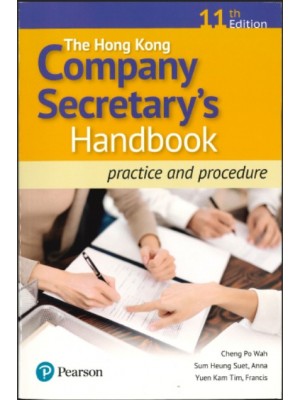
The Hong Kong Company Secretary's Handbook: Practice and Procedure (11th Edition)

List Price: RM297.54

RM288.61 Save RM8.93 (3%)

Hong Kong Tax & Accounting Practical Toolkit (Basic Package)
RM1,965.06
Hong Kong Listed Companies: Law and Practice, 2nd Edition

List Price: RM1,069.20

RM1,037.12 Save RM32.08 (3%)

KPMG's Insights into IFRS 2025/2026 (22nd Edition) (e-Book only)


List Price: RM1,172.88

RM1,137.69 Save RM35.19 (3%)

Hong Kong GAAP: A Master Guide to Financial Reporting Standards 2025 (18th Edition)

List Price: RM745.20

RM722.84 Save RM22.36 (3%)

Hong Kong Master Tax Guide 2025/26 (33rd Edition)

List Price: RM783.00

RM759.51 Save RM23.49 (3%)

Singapore Master Tax Guide 2025-26, 44th Edition

List Price: RM874.80

RM848.56 Save RM26.24 (3%)

Japan Master Tax Guide 2025-26, 23rd Edition

List Price: RM1,398.60

RM1,356.64 Save RM41.96 (3%)

Singapore Master Guide to BEPS 2.0 – Multinational Enterprise (Minimum Tax)

List Price: RM567.00

RM549.99 Save RM17.01 (3%)

Malaysia Master Tax Guide 42nd Edition 2025

List Price: RM513.00

RM497.61 Save RM15.39 (3%)

Taxation in Hong Kong: A Practical Guide 2023-2024 (9th Edition)

List Price: RM745.20

RM722.84 Save RM22.36 (3%)

Hong Kong Company Secretary Checklist, 2nd Edition

List Price: RM745.20

RM722.84 Save RM22.36 (3%)

Wiley IFRS 2023: Interpretation and Application of IFRS Standards
RM675.00
A Concise Guide to Corporate Compliance Management (2nd Edition)

List Price: RM367.20

RM257.04 Save RM110.16 (30%)

China Master GAAP Guide (12th Edition)

List Price: RM810.00

RM785.70 Save RM24.30 (3%)

Introduction to International Taxation

List Price: RM496.80

RM481.90 Save RM14.90 (3%)

A Practical Guide to Company Secretarial Obligations in Singapore, 2nd Edition

List Price: RM653.40

RM633.80 Save RM19.60 (3%)

Consolidated Financial Statements, 11th Edition

List Price: RM399.60

RM387.61 Save RM11.99 (3%)

Hong Kong Financial Reporting Standards for SMEs (2nd Edition)

List Price: RM810.00

RM567.00 Save RM243.00 (30%)

Hong Kong Directors' Manual, 5th Edition

List Price: RM745.20

RM521.64 Save RM223.56 (30%)