





Currencies:HKD

You have no items in your shopping cart.

Reforming Justice

Reforming Justice A Journey to Fairness in Asia

  • Author:
  • Publisher: Cambridge University Press
  • ISBN: 9781107013827
  • Published In: May 2012
  • Format: Hardback , 382 pages
  • Jurisdiction: Asia ? Disclaimer:
    Countri(es) stated herein are used as reference only
Out of stock
OR
  • Description 
  • Contents 
  • Author 
  • Reviews

Details

'Reforming Justice' calls for justice to be repositioned more centrally in evolving notions of equitable development. Justice is fundamental to human well being and essential to development. Over the past fifty years, however, overseas development assistance - foreign aid - has grappled with the challenge of improving 'the rule of law' with underwhelming and often dismal results around the world. Development agencies have supported legal and judicial reforms in order to improve economic growth and good governance, but are yet to address mounting concerns about equity and distribution. Building on new evidence from Asia, Livingston Armytage argues that it is now time to realign the approach to promote justice as fairness and equity.

• Provides solutions to improve justice reform endeavor around the world

• Analysis of the philosophical justifications for reform exposes the pervasive influence of ideology in the justification of development

• Examines a substantial body of new evidence from Asia, an area which has hitherto been the subject of little scholarly analysis

Acknowledgements
xv
1             Introduction
1
1             Roadmap
5
2             Reform purpose
6
3             What is justice – and why is it important?
9
4             Evaluating endeavour
14
5             Case studies of practice
19
6             Generalised findings and key empirical propositions
22
7             Conclusions: a theory of justice reform
24
Part 1        Judicial reform enterprise
27
Introduction to Part 1
27
2             History and context
29
1             Introduction
29
2             Context and history
29
a.            Three moments or five waves?
31
b.            Early days: USAID's law and development
32
c.            Structural adjustment, the ‘Washington Consensus’ and poverty reduction
33
d.            ‘Rule of law’ revival and democracy
34
e.            But what is the ‘rule of law’ orthodoxy – a blind man's elephant?
37
f.            Shihata's long shadow – judicial reform at the World Bank
38
g.            Governance and institutionalism: from enabling to capable state
40
h.            A more comprehensive approach: embracing social and human dimensions
42
i.            Towards equity?
43
j.            Fragility, safety and security
45
3             Conclusions
47
3             Nature and critique of reforms
49
1             Introduction
49
2             Nature of reforms – the ‘standard package’
49
a.            ‘Thin’ or ‘thick’ reform?
51
3             Mounting perceptions of disappointment – the ‘performance gap’
53
4             Reinvention
58
a.            Convergence with human rights and empowerment
58
b.            Engagement in the informal customary sector and legal pluralism
64
c.            Political economy – DfID's approach to power
65
d.            Acknowledging the distributional dimension of judicial reform
68
e.            Constitutionalism and the politics of allocation
71
5             Conclusions
75
4             Theories of reform
77
1             Introduction
77
a.            Theory, practice and the use of dichotomy
77
2             Theorists – philosophy and justification
79
a.            Foundations of classical thinking: justice, equality and equity
80
b.            Visions from the Enlightenment of the state and individual
81
i.            The fulcrum of liberalism
84
ii.           The tipping point of neo-liberalism – and the contest over economics
85
iii.          The significance of liberalism
87
c.            The contest of modern philosophy
88
i.            Institutionalism
88
ii.           North's rules of the game
89
iii.          Sen's transformative vision of human capability
91
3             Conclusions
97
5             Empirical evidence
100
1             Introduction
100
2             Sufficiency of the economic justification for development
101
a.            The role of empirical evidence in the theory: practice dichotomy
102
b.            Historical evidence of the market economy
103
c.            Development's failure to ensure equitable growth
105
d.            Conviction, ideology and the selectivity of empirical validation
109
3             Justice and growth – a synopsis of empirical determinants
111
a.            Transplantation and ‘legal-origins’ debate
112
b.            New comparative economics and good governance
113
c.            Are institutions trumps?
115
d.            Precepts of independence – checks and balances
118
e.            Empirical inquiry – torch beams in the night
120
4             Conclusions to Part 1 – building a better theory
123
Part 2        Evaluation
129
Introduction to Part 2
129
6             Evaluating aid
133
1             Introduction
133
2             Key concepts
134
3             Purpose and models
135
a.            Professionalisation
137
b.            From Paris to Accra – improving development effectiveness
138
c.            Millennium Development Goals
139
d.            Managing for development results
141
e.            Critique of MfDR
143
4             Arenas of debate
146
a.            Project management and the logical-framework approach
146
b.            The paradigm war over evaluative models
149
c.            The positivist approach to impact
150
d.            Constructivism and participatory evaluation
154
5             Meta-evaluation of practice – and the ‘development evaluation gap’
157
6             Conclusions
160
7             Evaluating judicial reform
164
1             Introduction
164
2             Measuring performance
166
a.            Indicators and metrics
166
b.            Quality or quantity of justice?
169
c.            Monitoring frameworks
171
d.            Critique of frameworks
173
3             Synthesis – gaps in performance and evaluation
177
a.            ‘Scholars in self-estrangement’
178
b.            Blair and Hansen – ‘rule of law’ under the spotlight
178
c.            The nature of evaluative commentary
179
4             Deficiency in evaluative practice – the ‘evaluation gap’ in judicial reform
181
a.            Omission and the missing middle
181
b.            Hammergren: the ‘fireman's syndrome’
182
5             Meta-evaluation – the double gap in evaluation
183
6             Filling the gaps – two proposals for evaluating judicial reform
185
a.            Measurement of rights – a work in progress
187
7             Conclusions
189
Part 3        Case studies of the Asian reform experience
193
Introduction to Part 3
193
a.            Three case studies
194
b.            Methodology
195
c.            Structure
196
8             ADB's judicial reform experience in Asia: 1990–2007
197
1             Introduction
197
2             Background
199
3             Findings and analysis
200
a.            Policy framework
200
i.            Governance policy
200
ii.           Poverty strategy
202
iii.          Long-term strategies
203
b.            Implementation
204
i.            Mitchell's puzzle – evolving justifications for reform
206
ii.           Justification – an ever-increasingly heady mix
207
iii.          Reform activities
208
iv.           Reflections on experience
211
c.            Evaluation systems
211
i.            Developmental considerations – what the ADB says, and what it does
213
ii.           Evaluation of technical assistance
214
iii.          Evaluation of judicial reform
215
4             Conclusions
215
a.            Significance for the purpose of judicial reform
216
b.            Significance for the evaluation of judicial reform
218
9             AusAID’s program in Papua New Guinea, 2003–2007
221
1             Introduction
221
2             Background
222
3             Findings and analysis
225
a.            Journey to aid effectiveness – ownership, capacity and change
225
b.            Managing for development results
228
i.            Planning
228
ii.           Performance monitoring
231
iii.          Evaluation, impact, results and contribution
233
c.            Strategic approaches
236
i.            Restorative justice and the bias towards the formal sector
236
ii.           Change management and incentives
239
4             Conclusions
240
a.            Significance for the purpose of judicial reform
240
b.            Significance for the evaluation of judicial reform
244
c.            Ethnomethodological insights
247
10            Voices of the Asia Pacific experience
251
1             Introduction
251
2             Background
251
3             Findings
253
a.            Securing justice
254
b.            Case-management reform and delay reduction
254
c.            Promoting access to justice
255
d.            Ethics, integrity and judicial accountability
257
e.            Judicial education
258
4             Editorial and ethnomethodological analysis
259
a.            Goals
259
b.            Leadership
260
c.            Community
261
d.            Donors
262
e.            Independence
263
f.            Training and capacity-building
264
g.            Data
265
h.            Results
266
5             Conclusions
267
a.            Significance for the purpose of judicial reform
268
b.            Significance for the evaluation of judicial reform
269
c.            Ethnomethodological insights
270
6             Summing up Part 3
272
7             Generalised findings and observations from practice
275
11            The way forward
279
1             Putting this theory into practice
286
2             A taxonomy of just reform: court-focused and development-wide
288
3             Next steps
291
Annexes
293
Annex A       Frameworks of measurement
295
1             Measuring justice – court-level measures
295
a.            ABA-CEELI – Judicial Reform Index
295
b.            Vera indicators for the justice sector
296
c.            IFES Rule of Law Tool
296
d.            European Commission for the Efficiency of Justice
297
e.            Productivity Commission Reports on Government Services, Australia
297
f.            Judicial quality: the Netherlands – RechtspraaQ
298
g.            International Framework for Court Excellence, and Rule of Law Index
298
2             Measuring justice – government-level measures
299
a.            The Bertelsmann Transformation Index
300
b.            The Freedom House World Survey
300
c.            The Global Integrity Index
300
d.            The Transparency International Global Corruption Barometer
300
e.            The Transparency International Diagnostic Checklist
301
f.            DataGob
301
g.            The World Justice Project's Rule of Law Index
301
h.            World Governance Assessment
301
i.            The World Bank's ‘Doing Business’
302
j.            Worldwide Governance Indicators
302
3             The challenge – balancing clarity with simplicity
303
Annex B       Part 3: Empirical methodology and justification
305
1             Methodology
305
2             Participation
306
3             Ethnomethodological reflection
307
4             Annex B.1 – Chapter 8: methodology
308
5             Annex B.2 – Chapter 9: methodology
309
6             Annex B.3 – Chapter 10: methodology
310
Annex C       Sample extracts of PNG newspapers, 2003–2004
312
Annex D       Chapter 9: AusAID inventory of documents
314
Bibliography
319
Articles, books, reports and websites
319
Treaties and other international materials
350
Index
352

Livingston Armytage
The Centre for Judicial Studies and The University of Sydney

Advance praise: 'Despite decades of effort and billions of international assistance dollars invested in development of competent, fair, and independent legal and judicial systems, there remain far too few examples of real and enduring success. In his new book, Livingston Armytage argues passionately that the core problem has been a failure to embrace the centrality of justice in legal and judicial reform efforts. Many of us in the development community continue to view universal rights-centric approaches to development with a degree of skepticism, but the insistence that advancing justice, however locally conceived and however achieved, is a central concern of all human beings is surely correct. Reforming Justice is an important contribution to the increasingly critical process of re-examining the assumptions and logic that underlies conventional assistance in this difficult area of international assistance.' William Stadden Cole, The Asia Foundation


You may also be interested in these books:

Hong Kong Company Secretary's Practice Manual, 6th Edition

List Price: RMB 1,302.40

RMB 1,263.33 Save RMB 39.07 (3%)

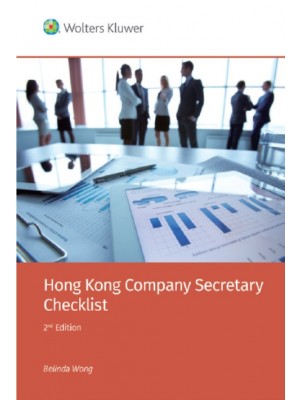
Hong Kong Company Secretary Checklist, 2nd Edition

List Price: RMB 1,214.40

RMB 1,177.97 Save RMB 36.43 (3%)

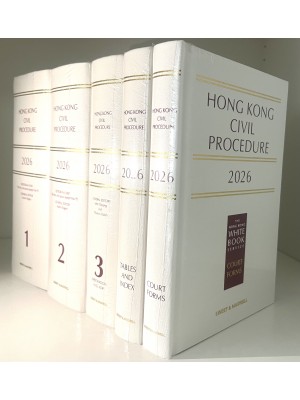
Hong Kong Civil Procedure 2026 (The White Book)
RMB 12,047.20
Hong Kong Civil Court Practice (Desk Edition 2026)

List Price: RMB 4,312.00

RMB 3,665.20 Save RMB 646.80 (15%)

Construction Industry Security of Payment Ordinance in Hong Kong (Hardcopy + e-book)

List Price: RMB 1,496.00

RMB 1,271.60 Save RMB 224.40 (15%)

Criminal Litigation in Hong Kong, 5th Edition (Hardcopy + e-book)

List Price: RMB 1,540.00

RMB 1,493.80 Save RMB 46.20 (3%)

Hong Kong Tax & Accounting Practical Toolkit (Basic Package)
RMB 3,202.32
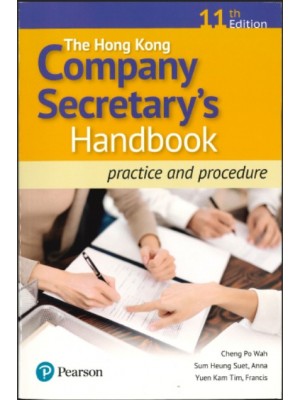
The Hong Kong Company Secretary's Handbook: Practice and Procedure (11th Edition)

List Price: RMB 484.88

RMB 470.33 Save RMB 14.55 (3%)

Civil Litigation in Hong Kong, 7th Edition (Hardcopy + e-book)

List Price: RMB 1,936.00

RMB 1,548.80 Save RMB 387.20 (20%)

Butterworths Hong Kong Company Law Handbook, 27th Edition

List Price: RMB 4,435.20

RMB 4,302.14 Save RMB 133.06 (3%)

Hong Kong Family Court Practice, 5th Edition

List Price: RMB 2,657.60

RMB 2,577.87 Save RMB 79.73 (3%)

Butterworths Hong Kong Discrimination Law Handbook, 4th Edition

List Price: RMB 1,320.00

RMB 1,280.40 Save RMB 39.60 (3%)

Sentencing in Hong Kong, 11th Edition

List Price: RMB 3,150.40

RMB 3,055.89 Save RMB 94.51 (3%)

Butterworths Hong Kong Company Law (Winding-Up and Miscellaneous Provisions) Handbook, 6th Edition

List Price: RMB 2,006.40

RMB 1,946.21 Save RMB 60.19 (3%)

Tort Law in Hong Kong, 5th Edition (Hardcopy + ebook)

List Price: RMB 2,200.00

RMB 2,134.00 Save RMB 66.00 (3%)

Clough & Clough on Personal Injuries

List Price: RMB 1,320.00

RMB 1,280.40 Save RMB 39.60 (3%)

Hong Kong Personal Insolvency Manual, 3rd Edition

List Price: RMB 1,760.00

RMB 1,707.20 Save RMB 52.80 (3%)

Butterworths Hong Kong Conveyancing and Property Law Handbook, 6th Edition

List Price: RMB 1,584.00

RMB 1,536.48 Save RMB 47.52 (3%)

A Practical Guide to Resolving Shareholder Disputes, 2nd Edition

List Price: RMB 1,584.00

RMB 1,536.48 Save RMB 47.52 (3%)

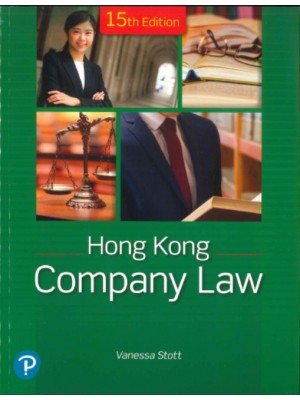
Hong Kong Company Law, 15th Edition

List Price: RMB 432.96

RMB 419.97 Save RMB 12.99 (3%)