Currencies:HKD

You have no items in your shopping cart.

Principles of Business Taxation (2013)

Principles of Business Taxation (2013)

  • Author:
  • Publisher: CCH U.S.
  • ISBN: 9780808029717
  • Published In: March 2012
  • Format: Paperback , 760 pages
  • Jurisdiction: U.S. ? Disclaimer:
    Countri(es) stated herein are used as reference only
New Edition is available now !
OR
  • Description 
  • Contents 

  • Author 

Details

The CCH Principles of Business Taxation course approaches the study of taxation from the perspective of the student who will become a business person faced with business decisions that are inevitably affected by tax considerations. This perspective leads to a very different coverage in this textbook -- coverage that is useful for accounting, finance and general business majors. The new edition focuses on the central concepts that build our tax framework and avoids small exceptions and details to ensure that the student can confidently master the critical underpinnings of federal taxation. It abandons minutia that not only affects a very small number of taxpayers, but also tends to change often. In this way, there are no wasted motions and students gain a stronger, more solid understanding of federal tax principles.

Many items that pertain specifically to businesses (for example, inventory valuation issues) usually not discussed in a traditional undergraduate tax textbook are covered in this book. Although so many of the exclusions, deductions, and credits apply equally to individual and corporate taxpayers, this book focuses on the business perspective. An advantage to this approach is that most of the students who take only one course in taxation will learn how businesses are taxed and, in turn, will have a better appreciation for how taxes affect business decisions. Another advantage to this approach is that the topics dovetail into other business, finance and accounting course work.

While the focus is on concepts and how taxes affect business decisions, individual income taxation is not abandoned. After all, many core tax concepts apply to individuals as well as businesses, and thePrinciples of Business Taxation course is not shy in pointing out such application. The book also includes a special chapter on individuals (sole proprietorships) and one on pass-through entities that tie together the underlying threads concerned with these taxpayers throughout the text.

PART I: OVERVIEW OF TAXES AND THE FEDERAL INCOME TAX SYSTEM

  • Part I of the textbook introduces students to the concept of taxes to gain a better appreciation for why taxes exist and how taxes allow governments to provide goods and services. The discussion involves equity considerations, and introduces the "ability to pay" and "wherewithal to pay" concepts, among others. After providing students with a survey of the various taxes that governments impose, the federal income tax is discussed in detail, since it is the focus of this book. An overview of the individual and corporate taxable income formulas is provided, as well as an introduction to the concept of flow-through entities as another alterative to operating a business. This discussion sets the groundwork for the rest of the book. The second half of this Part discusses sources of U.S. federal income tax laws -- the Internal Revenue Code, Treasury regulations and case law. In addition to introducing students to the various types of tax authority, the "hierarchy" of these sources are discussed along with an introduction to tax planning and tax research.

PART II: FEDERAL TAXATION OF BUSINESS INCOME AND DEDUCTIONS

  • Part II illustrates how businesses calculate taxable income starting with a discussion of accounting periods and methods, a more detailed overview of taxable income and how taxes are owed or refunded. The focus then shifts to a discussion of which items of income are taxed and which expenditures can be deducted against taxable income.

PART III: TRANSACTIONS INVOLVING BUSINESS PROPERTY

  • Part III provides a substantive discussion of the tax consequences of owning property, such as depreciation, gain/loss on disposal, and the rules pertaining to property transactions. A comparison of the financial accounting depreciation methods and tax laws is emphasized in the chapter.

PART IV: CALCULATING TAX LIABILITY AND TAXES OWED

  • Part IV discusses calculation of tax liability and taxes owed (refunded) in detail, with the focus on businesses that pay taxes -- sole proprietorships and corporations.

PART V: SPECIFIC BUSINESS ENTITY ISSUES

  • Part V discusses the tax laws unique to each of the three types of business: corporations, sole proprietorships, and flow-through entities. This Part starts with the discussion of corporate distributions and the reconciliation of net income and taxable income. Then the book provides an understanding of how businesses operated as sole proprietorships fit into the owner's individual tax return, as individuals are often shareholders in corporations or the owners of flow-through entities. The expanded taxable income formula for individuals is discussed keeping the discussion of the personal deduction (from AGI) kept to a minimum. The progressive rate structure that applies to individuals, and the reduced tax rates that apply to qualified dividends and net capital gains are emphasized in the chapter. The role of flow-through entities as an option for operating a business rounds out the coverage for this Part.

PART I: OVERVIEW OF TAXES AND THE FEDERAL INCOME TAX SYSTEM

  • Chapter 1: Introduction to Taxation
    • I. Introduction
    • II. Society's Need for Taxes
    • III. Who Should Bear the Tax Burden?
    • IV. Characteristics of a "Good" Tax
    • V. Other Considerations Used in Assessing a Tax
    • VI. Types of Taxes
    • VII. The Importance of Studying Federal Income Taxes Imposed on Businesses
  • Chapter 2: Understanding the Tax Laws
    • I. Introduction
    • II. Brief History of Federal Income Tax
    • III. Understanding Federal Tax Law
    • IV. Federal Tax Research

PART II: FEDERAL TAXATION OF BUSINESS INCOME AND DEDUCTIONS

  • Chapter 3: Tax Accounting Rules
    • I. Introduction
    • II. Accounting Periods
    • III. Accounting Methods
  • Chapter 4: Overview of the Taxable Income and the Calculation of Taxes Owed
    • I. Gross Income (Income Minus Exclusions)
    • II. Taxable Income (Gross Income Minus Deductions)
    • III. Taxes Owed (Tax Liability Minus Tax Credits Minus Estimated Payments)
  • Chapter 5: Gross Income
    • I. Introduction
    • II. Gross Income Defined
    • III. Gross Profit
    • IV. Dividend Income
    • V. Interest Income
    • VI. Other Items of Gross Income
  • Chapter 6: Business Deductions: Ordinary and Necessary Business Expenses
    • I. Introduction
    • II. Elements of a Business Expense
    • III. Interest, Taxes, and Carrying Charges
    • IV. Research and Experimentation
    • V. Manufacturer's Deduction
    • VI. Bad Debts
    • VII. Charitable Contributions
  • Chapter 7: Business Deductions: Employment-related Expenses
    • I. Introduction
    • II. Employee Compensation
    • III. Meals and Entertainment
    • IV. Travel and Transportation
    • V. Education
    • VI. Employment taxes

PART III: TRANSACTIONS INVOLVING BUSINESS PROPERTY

  • Chapter 8: Property Transactions: Depreciation, Depletion and Amortization
    • I. Introduction
    • II. Overview of Depreciation
    • III. Depreciation of Personal Property
    • IV. Depreciation of Real Property
    • V. Depletion
    • VI. Amortization of Intangibles
  • Chapter 9: Property Transactions: Realized and Recognized Gains and Losses
    • I. Introduction
    • II. Realized Gains and Losses
    • III. Recognized Gains and Losses
  • Chapter 10: Property Transactions: Character of Gain or Loss
    • I. Introduction
    • II. Capital Gains and Losses
    • III. Section 1231 Gains and Losses
    • IV. The Netting Process

PART IV: CALCULATING TAX LIABILITY AND TAXES OWED

  • Chapter 11: NOLs, AMT and the AET
    • I. Introduction
    • II. Net Operating Losses
    • III. Alternative Minimum Tax
    • IV. Taxes Imposed on Excessive Corporate Accumulations
  • Chapter 12: Tax Credits
    • I. Introduction
    • II. Tax Credits
    • III. Foreign Tax Credit
    • IV. General Business Credit
    • V. Disabled Access Credit

PART V: SPECIFIC BUSINESS ENTITY ISSUES

  • Chapter 13: Corporate Distributions and Schedules M-1, M-2 and M-3
    • I. Introduction
    • II. Corporate Distributions
    • III. Reconciliation of Net Income and Taxable Income
  • Chapter 14: The Sole Proprietorship
    • I. Introduction
    • II. Taxable Income Formula
    • III. NOLs, Tax Rates and AMT
    • IV. Employment Issues
    • V. Passive Activity Loss and Hobby Loss Rules
  • Chapter 15: Flow-Through Entities: Partnerships, LLPs and LLCs
    • I. Introduction
    • II. Tax and Nontax Aspects of Flow-through Entities
    • III. Forming a Partnership
    • IV. Operating the Partnership
    • V. Adjustments to Basis of Partner's Interest
    • VI. Partnership vs. LLC
  • Chapter 16: Flow-Through Entities: S Corporations
    • I. Introduction
    • II. Advantages and Disadvantages of S Corporation Versus Other Entity Choices
    • III. Operating an S Corporation
    • IV. Special Rules

Linda M. Johnson, Ph.D., CPA, received her Bachelor of Science degree in Accountancy from the University of Illinois, Urbana-Champaign and her doctorate from Arizona State University. In her over 20 years of collegiate teaching of graduate and undergraduate tax courses, Professor Johnson has received over a dozen departmental, college, and university teaching awards, including the university's top teaching award while on the faculty at Northern Illinois University, and as a teaching assistant at Arizona State University. In addition to being the author of Essentials, Professor Johnson is the coordinating editor of CCH's Federal Tax Course.

Her professional experience includes working in the tax department for three years at Arthur Young & Co. in Houston, Texas and as a faculty intern with Crowe Chizek & Co. at the Oakbrook, Illinois office. Professor Johnson has published several articles on topics in taxation at various professional journals, including the Journal of Accountancy, Taxes The Tax Magazine, The CPA Journal and The Tax Advisor.

You may also be interested in these books:

Hong Kong Company Secretary's Practice Manual, 6th Edition

List Price: RM799.20

RM775.22 Save RM23.98 (3%)

Hong Kong Company Secretary Checklist, 2nd Edition

List Price: RM745.20

RM722.84 Save RM22.36 (3%)

Hong Kong Civil Procedure 2026 (The White Book)
RM7,392.60
Hong Kong Civil Court Practice (Desk Edition 2026)

List Price: RM2,646.00

RM2,249.10 Save RM396.90 (15%)

Construction Industry Security of Payment Ordinance in Hong Kong (Hardcopy + e-book)

List Price: RM918.00

RM780.30 Save RM137.70 (15%)

Criminal Litigation in Hong Kong, 5th Edition (Hardcopy + e-book)

List Price: RM945.00

RM916.65 Save RM28.35 (3%)

Hong Kong Tax & Accounting Practical Toolkit (Basic Package)
RM1,965.06
The Hong Kong Company Secretary's Handbook: Practice and Procedure (11th Edition)

List Price: RM297.54

RM288.61 Save RM8.93 (3%)

Civil Litigation in Hong Kong, 7th Edition (Hardcopy + e-book)

List Price: RM1,188.00

RM950.40 Save RM237.60 (20%)

Butterworths Hong Kong Company Law Handbook, 27th Edition

List Price: RM2,721.60

RM2,639.95 Save RM81.65 (3%)

Hong Kong Family Court Practice, 5th Edition

List Price: RM1,630.80

RM1,581.88 Save RM48.92 (3%)

Butterworths Hong Kong Discrimination Law Handbook, 4th Edition

List Price: RM810.00

RM785.70 Save RM24.30 (3%)

Sentencing in Hong Kong, 11th Edition

List Price: RM1,933.20

RM1,875.20 Save RM58.00 (3%)

Butterworths Hong Kong Company Law (Winding-Up and Miscellaneous Provisions) Handbook, 6th Edition

List Price: RM1,231.20

RM1,194.26 Save RM36.94 (3%)

Tort Law in Hong Kong, 5th Edition (Hardcopy + ebook)

List Price: RM1,350.00

RM1,309.50 Save RM40.50 (3%)

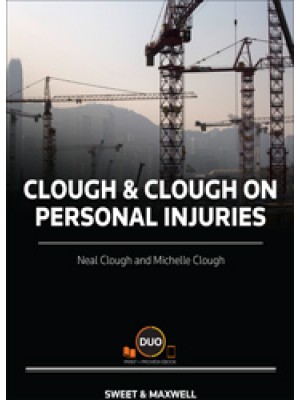
Clough & Clough on Personal Injuries

List Price: RM810.00

RM785.70 Save RM24.30 (3%)

Hong Kong Personal Insolvency Manual, 3rd Edition

List Price: RM1,080.00

RM1,047.60 Save RM32.40 (3%)

Butterworths Hong Kong Conveyancing and Property Law Handbook, 6th Edition

List Price: RM972.00

RM942.84 Save RM29.16 (3%)

A Practical Guide to Resolving Shareholder Disputes, 2nd Edition

List Price: RM972.00

RM942.84 Save RM29.16 (3%)

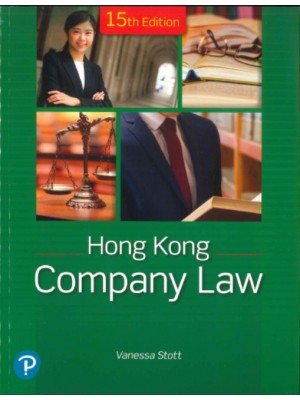
Hong Kong Company Law, 15th Edition

List Price: RM265.68

RM257.71 Save RM7.97 (3%)